 Corinthians Hub
In recent matches, Corinthians has stood out for its defensive consistency and pragmatic approach in attack. However, to maximize the squad's potential and compete at a high level, it's essential to implement some tactical adjustments that can offer greater fluidity in play and increase offensive creativity.
1. Reinforcing Offensive Transition
Although the defense has been robust, the transition from defense to attack often appears slow and predictable. One solution would be to encourage defenders to advance with the ball more frequently, using vertical passes to midfielders or forwards instead of resorting to sideways passes. This would not only speed up the game but also create more attacking opportunities, leveraging the pace of players like Z. Labyad and M. Depay, who can cause havoc in opposing defenses.
2. Increasing Mobility in Midfield
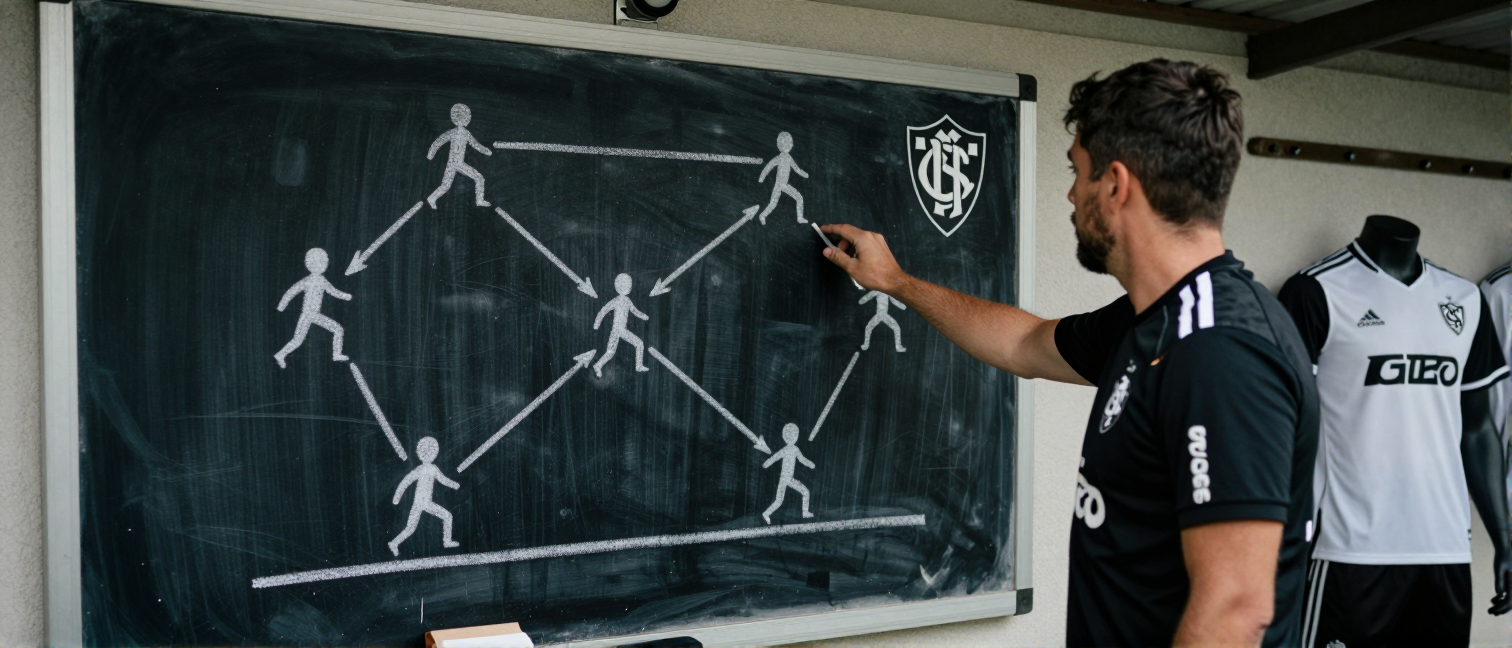
The current structure in midfield, with André Ramalho as the central midfielder, is effective in controlling the game but can become predictable. One option would be to use a system with two holding midfielders, allowing one of them, like Alex Santana, to push further up the pitch. This would create a triangle in midfield, facilitating passing exchanges and movement, making Corinthians more dynamic and difficult to mark.
3. Exploiting the Flanks
The flanks have been a vital part of Corinthians' game, but there is room to improve the exploitation of the wings. The overlapping runs of full-backs like Fagner and Lucas Piton need to be more coordinated and synchronized with the movements of forwards. This can be achieved with an overlapping system, where one full-back advances while the other positions defensively, ensuring security while creating crossing and penetration options.
4. Intensifying High Press
While Corinthians has shown solid gameplay, high pressing could be a lethal weapon, especially against teams that struggle with pressure. By implementing a more intense pressing strategy, Timão could force errors in the opponent's build-up and capitalize on these opportunities. For this, the team must quickly organize upon losing possession, ensuring that all players are aligned to press as a unit.
5. Tactical Flexibility
Finally, tactical flexibility should be a priority. In matches where the opponent sits deep, Corinthians must be prepared to change its formation, perhaps adopting a 4-2-3-1 instead of the traditional 4-1-4-1, allowing for greater presence in attack. This not only confuses opposing defenses but also gives Timão the ability to adapt to the circumstances of the game.
In summary, while Corinthians has built a solid foundation, tactical adjustments can further enhance the team's performance. With a focus on offensive transition, mobility in midfield, exploiting the flanks, intensifying pressing, and tactical flexibility, Timão can prepare for a promising future in the League. The fans eagerly await the next displays from our beloved club.